

My first six months as a Community Service Doctor in rural RSA
May 25, 2025 | by Sbabalwe Dumisa Ntakana
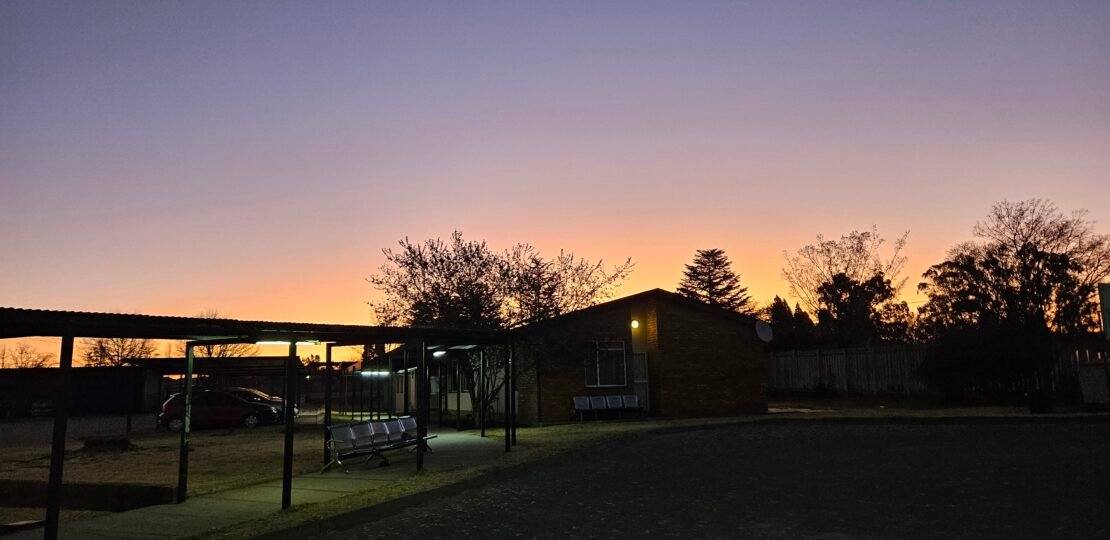
The service: In a Rural District Hospital
Understaffed, limited resources, major adjustment and constrained health services! A summation of my experience of the first six months at my facility. The first few weeks, [to the tee] what almost every consultant back in medical school clinical rotations warn us students about [in preparation] if we find ourselves “out in the bundus”.
Okay, but what is community service, you may ask? It is one year remunerated service in the public healthcare sector [ideally] at underserved communities introduced by the government in July 1998 for healthcare workers trained at South African (SA) universities.1,2 The intention being that distributing healthcare workers to these areas would improve access to primary healthcare services equitably.2
The community: Middle of nowhere?
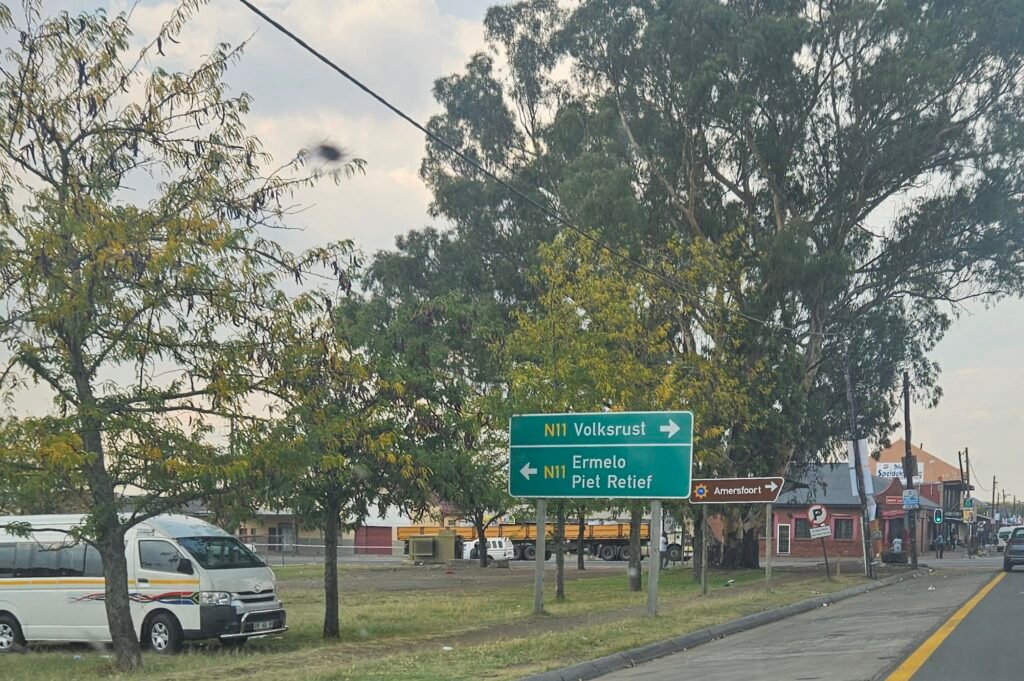
The National Department of Health’s Internship and Community Service Placement (ICSP) online system allocated me to a facility in Amersfoort. I had to google the name of course, and a city in the Netherlands popped up initially, but a few scrolls down and our very own town popped up. Our Amersfoort is a small town3 located in the Dr Pixley ka Seme Local Municipality in the Gert Sibande District of Mpumalanga Province.
It is roughly midway between the towns of Volksrust and Ermelo and roughly southeast of Bethal. Basically, to me, that essentially meant in the middle of nowhere. Population, 12 335 with 3625 households split between the adjacent township of Ezamokuhle with an area of 6,2km2 [and a density of 1 657 people per km2] and the town proper with an area 10,8km2 [and a density of 187 people per km2] in the previous census.4,5 The hospital serves this population, surrounding farms and some sections of the nearby town of Daggakraal.
Understaffed: On Paper & in Practice
Shortage of doctors and nurses is a common phenomenon across several health facilities in SA.6 Excluding five CSMOs and five sessional medical officers, there were a total of two permanent medical officers for the entire hospital during my first six months. In the same time period vacancy for permanent medical officers remained unfilled, however clinical service delivery including overtime continued; and as anyone can imagine, burnout, demoralization and job dissatisfaction were readily observable amongst staff.
Limited resources: Essentially the Wild West?
On the first day of work and subsequent informal tour of the facility I recall being made aware that the Outpatient department (OPD) is in the SAME ROOM as the Accident and Emergency department, also known as Casualty. And when I say they are in the same room, I mean they are both in ONE ROOM. One entrance, one window, one air conditioner, one telephone and one emergency trolley! I went on to count two stretchers, two portable vitals machines, and a lot of charts and memoranda around the four walls.
By the end of the informal tour, I had noted that at the facility there was a single dark room X-ray machine and film printer; no functioning theatre; no blood gas or istat machines; and only twenty-two hospital beds. For ALL inpatients. Twenty-two beds.
Major adjustment: Undoubtedly
During the first few months I rotated in the one room OPD/casualty, certainly quite the shift from my experience during internship at an urban regional hospital. A typical day would involve reviewing patients collecting their chronic medication; seeing walk-in patients with acute medical conditions and occasionally patients brought by emergency medical services (EMS).
Not so typical for me however was an OPD without any booking system with a fluctuating number of patients collecting chronic medication to review day-to-day. The patients with acute conditions with or without referral letters, ZERO triage process! I do not mean vitals not being taken when the patients present; I mean no triage early warning scores (TEWS) or colour codes assigned AT ALL! TEWS training would go on to be my first quality improvement project (QIP) at the facility.
Naturally the next question then would be exactly which patient would be seen first by the clinician? I asked that very question too on my first day, and the answer was “first-come-first serve” …There were exceptions of course, such as patients brought by EMS, conditions with clear clinical discriminator and/or if any additional investigations taken by a more experienced nurse during vitals were suspicious would be prioritized to be seen before the first comers. All this and more compared to clinical rotations as a medical student in academic hospitals or during internship really felt like the wild west in the beginning.
Constrained health services: Impactful nonetheless
While both rural and urban public healthcare facilities in SA contend with staff shortages6 and limited resources.7 My experiences throughout the first six months significantly emphasized just how unequal access to care is for users in rural7. The first observation I had were longer waiting times to care, from investigational work up to emergency surgical intervention. For example, in my previous experience as an intern, booking an emergency cesarean section took significantly shorter time. At my facility, after discussing with a surgeon, instead of calling for a porter to theatre we would have to call an ambulance for patient transport instead, to transfer our patient to theatre at a separate facility.
The second, the limited access to alternative options of care. Again, as an example, as an intern, patients and their families often consulted multiple facilities and physicians seeking second opinions. In my community, there were only two general practitioners (GPs) in the area and the nearest hospital is more than 40km away. It was not all doom and gloom however, with all the challenges that existed with the constrained services at the facility level the [greater] public health system oftentimes provided an invaluable lifeline and access to healthcare.
So… the first six months
In conclusion the experience of the first six months as a CSMO in a rural South African district hospital, understaffed with limited resources was a radical adjustment from the experience medical school and medical internship provided. Constrained services “out in the bundus” prompted considerable reflection on the healthcare system as a whole in my final six months as a CSMO.
Disclaimer
The views and opinions expressed in this blog are those of the author and do not necessarily reflect the official policy or position of any affiliated agency of the author.
References
1. National Department of Health. About Internship Community Service Programme (ICSP) [Internet]. 2020 [cited 2025 May 9]. Available from: https://www.health.gov.za/icsp/
2. Reid S. 20 Years of community service in South Africa: what have we learnt?. South African Health Review. 2018 Mar 1; 2018 (1): 41-50. Available from: https://journals.co.za/doi/epdf/10.10520/EJC-144916d9ce
3. Mpumalanga Tourism & Parks Agency. Amersfoort [Internet]. 2020. [cited 2025 May 9]. Available from: https://www.mpumalanga.com/places-to-go/grass-wetlands/amersfoort
4. Statistics South Africa. Main Place Amersfoort. [Internet] 2011. [cited 2025 May 10]. Available from: https://www.statssa.gov.za/?page_id=4286&id=11487
5. Frith A. Amersfoort Main Place 863001 from Census 2011. [Internet] 2011. [cited 2025 May 10]. Available from: https://census2011.adrianfrith.com/place/863001
6. Bloomberg. South Africa can’t afford the doctors it needs [Internet]. BusinessTech. 2024 [cited 2025 May 10]. Available from: https://businesstech.co.za/news/government/740765/south-africa-cant-afford-the-doctors-it-need-2/
7. Gaede B, Versteeg M. The state of right to health in rural South Africa. South African Health Review. 2011 Jan 1; 2011 (1): 99-106. Available from: https://journals.co.za/doi/epdf/10.10520/EJC119080
RELATED POSTS
View all


My final six months as a Community Service Doctor in rural RSA
July 7, 2025 | by Sbabalwe Dumisa Ntakana